

 Quick Answer
Modern orthodontic technology helps orthodontists plan and personalize treatment with greater precision. Tools such as digital impressions, 3D imaging and customized braces provide detailed information about your teeth and bite, helping guide treatment decisions. These advances can also make certain appointments more comfortable and efficient. A consultation helps determine which technologies and treatment options are most appropriate for your smile.
Key Takeaways
- More precise treatment planning: Digital technology helps orthodontists evaluate tooth positions and develop personalized treatment plans.
- Improved patient comfort: Digital impressions can eliminate the need for traditional putty molds.
- Customized treatment: Advanced technology supports orthodontic appliances designed around each patient’s unique smile.
- Greater efficiency: Digital workflows simplify certain steps in planning and producing appliances.
- Professional expertise still matters: Technology supports an orthodontist’s clinical judgment rather than replacing it.
How Does Modern Orthodontic Technology Improve Care?
Modern orthodontic technology improves care by giving orthodontists like Dr. Keith Kohrs more detailed information about a patient’s teeth, bite and treatment needs. With digital tools, Dr. Kohrs creates accurate models, customizes appliances and monitors changes throughout treatment.
Treatment involves gradually moving teeth into healthier, more functional positions. Whether you’re considering braces or clear aligners, the goal is to improve how your teeth fit together while creating a smile you feel confident sharing.
Traditionally, orthodontists relied on physical impressions, photographs, X-rays and clinical examinations to plan treatment. These methods remain valuable, but digital advancements have expanded how orthodontists collect and use information.
At Kohrs Orthodontics in Aurora, Bennett and Strasburg, CO, Dr. Kohrs combines advanced technology with individualized care to develop treatment recommendations based on each patient’s needs. By pairing modern tools with personal attention, our team helps children, teens and adults feel comfortable and informed throughout their experience.
What Types of Technology Are Used in Modern Orthodontics?
Several advances have changed how orthodontists evaluate patients, design appliances and plan tooth movement. Each technology serves a different purpose, but together they make the treatment process more personalized.
Digital Impressions: A More Comfortable Way to Capture Your Smile
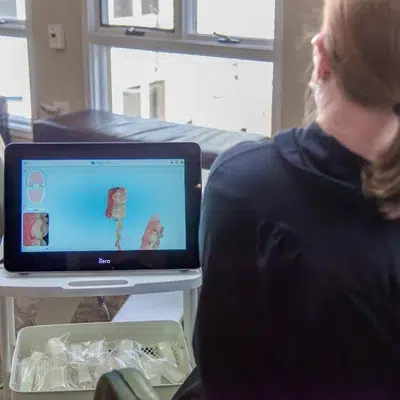
Digital impressions use a handheld intraoral scanner to create a three-dimensional model of your teeth and gums. Instead of biting into trays filled with impression material, patients have their teeth scanned with a small device.
The scanner captures detailed images that are combined into a digital model. Dr. Kohrs uses this information to evaluate tooth alignment and help plan treatment.
Benefits of digital impressions include:
- Greater comfort: No bulky trays or messy impression putty for many procedures.
- Detailed digital models: Scans capture the shape and position of your teeth.
- Convenient information sharing: Digital files can be used in treatment planning and appliance fabrication.
- Fewer impression-related errors: Scans can be reviewed immediately, allowing our team to capture additional areas when needed.
Digital impressions are particularly helpful for younger patients and people who have difficulty tolerating traditional impression materials.
To learn more about this technology, read our blog on how digital impressions transform the orthodontic experience.
3D Imaging: A More Detailed View of Your Teeth and Bite
Three-dimensional technology helps Dr. Kohrs better understand how teeth are positioned and how the upper and lower arches fit together.
Digital scans produce 3D surface models of the teeth. In certain cases, Dr. Kohrs may also recommend three-dimensional X-ray imaging, such as cone-beam computed tomography (CBCT), to evaluate structures beneath the gums.
These technologies serve different purposes. An intraoral scanner captures the visible surfaces of the teeth, while CBCT provides information about tooth roots, jawbones and surrounding anatomy.
Three-dimensional X-ray imaging isn’t necessary for every patient. Dr. Kohrs determines whether additional imaging is appropriate based on the individual’s clinical needs.
3D Printing: Customized Appliances
Three-dimensional printing allows appliances and models to be created from digital designs.
After Dr. Kohrs captures a digital impression, specialized software helps create a model or appliance tailored to the patient’s teeth. A 3D printer then produces the physical component using appropriate materials.
Depending on the treatment system, 3D printing may be used to create:
- Customized models
- Clear aligner manufacturing models
- Indirect bonding trays for placing braces
- Certain retainers and other appliances
Some customized bracket systems also use digital treatment planning and 3D printing to produce brackets designed for individual teeth.
The primary benefit is personalization. Rather than relying exclusively on standardized components, Dr. Kohrs uses digital designs to help tailor appliances to the patient’s anatomy and treatment plan.
However, customized appliances don’t automatically produce faster or better results for every patient. Treatment outcomes still depend on the complexity of the case, the selected appliance, patient cooperation and professional oversight.
Digital Treatment Planning: Understanding Your Smile Before Treatment Begins
Digital treatment planning allows Dr. Kohrs to study tooth positions and develop a strategy for correcting alignment and bite concerns.
For certain treatments, specialized software creates a visual representation of planned tooth movements.
This technology helps Dr. Kohrs to:
- Evaluate crowding, spacing and alignment concerns
- Plan how teeth should move during treatment
- Design or select appropriate appliances
- Communicate the proposed treatment approach
- Make adjustments when clinically necessary
Digital simulations help patients understand their treatment, but they’re not guarantees of the final outcome. Teeth don’t always move exactly as predicted, and treatment plans may need to change as progress is evaluated.
Can Modern Orthodontic Technology Make Treatment Faster?
Modern orthodontic technology improves treatment efficiency, but it doesn’t guarantee a shorter treatment time.
For example, digital impressions simplify the process of collecting information about your teeth. Digital treatment planning also helps Dr. Kohrs organize tooth movements and design customized appliances before treatment begins.
Research into customized brackets has produced encouraging but mixed results. A 2024 systematic review found that customized and conventional appliances generally produced similar clinical outcomes, emphasizing the importance of proper treatment planning and professional oversight.
Your overall treatment timeline can vary based on several factors, including:
- The severity of your alignment or bite concerns
- The type of appliance used
- Your age and individual biological response
- How consistently you follow treatment instructions
- Whether unexpected adjustments are needed
For patients wearing clear aligners, following the recommended daily wear schedule is especially important. Patients with braces also need to care for their appliances and attend scheduled appointments.
The best approach is to focus on achieving healthy, stable results rather than simply finishing treatment as quickly as possible.
How Does Technology Help Dr. Kohrs Customize Treatment?
Digital technology helps Dr. Kohrs design treatment around the unique shape, position and alignment of each patient’s teeth.
No two smiles are exactly alike. Some patients have crowded teeth, while others have gaps, an overbite, an underbite or teeth that don’t fit together properly.
Modern treatment planning allows him to study these differences and recommend appliances suited to each patient’s needs.
| Treatment option | How technology may support treatment | Potential benefit |
| Traditional metal braces | Digital scans and treatment planning | Detailed records and individualized treatment planning |
| Clear ceramic braces | Digital impressions and appliance placement planning | More discreet treatment with precise placement |
| Clear aligners | Digital scans and computer-designed aligner sequences | Custom-fit removable appliances and planned tooth movements |
| Customized brackets | Digital tooth models and computer-aided bracket design | Brackets tailored to individual tooth anatomy |
At our practice, patients can explore treatment options, including traditional braces, clear braces and clear aligners.
Dr. Kohrs evaluates each patient’s needs before recommending an appropriate treatment approach. The most advanced option isn’t necessarily the best option for every smile.
Who Can Benefit From Modern Orthodontic Technology?
Children, teens and adults can benefit from digital orthodontic tools, although the technology used will depend on their treatment needs.
Children Beginning Care
Digital scans help Dr. Kohrs document tooth positions and evaluate developing smiles. They may also be useful when planning treatment for children who need intervention.
The American Association of Orthodontists recommends that children receive their first orthodontic evaluation by age seven. This allows Dr. Kohrs to identify developing concerns, even if treatment isn’t needed right away.
Parents can learn more in our blog about the right age for intervention.
Teens Considering Braces or Clear Aligners
Teenagers may appreciate digital impressions because they can avoid traditional putty molds for many procedures.
Digital treatment planning also helps teens and parents better understand the proposed treatment process, including the importance of wearing appliances correctly and attending follow-up appointments.
Adults Exploring Treatment
Adults often have questions about how treatment will fit into their professional and personal lives.
Digital scans and treatment planning helps Dr. Kohrs evaluate existing dental work, alignment concerns and treatment options.
For adults interested in a less noticeable appearance, clear braces or clear aligners might be appropriate, depending on their needs.
What Should You Expect During a Technology-Assisted Consultation?
A consultation is an opportunity to learn about your smile, discuss your goals and understand which treatment options will work best.
While the exact process varies by patient, an evaluation may involve the following steps:
- Discuss your concerns. Tell Dr. Kohrs what you would like to improve, whether that involves crowded teeth, spacing, bite problems or the appearance of your smile.
- Examine your teeth and bite. Dr. Kohrs evaluates your alignment, jaw relationships and overall oral health.
- Collect diagnostic records. Photographs, digital impressions or X-rays may be recommended based on your needs.
- Review treatment options. Dr. Kohrs explains which appliances may be appropriate and discusses the expected treatment process.
- Develop a personalized plan. Once the necessary information is collected, Dr. Kohrs recommends a treatment approach designed around your goals and clinical needs.
Not every patient requires every type of imaging or digital technology. The purpose of the evaluation is to determine what information is necessary to make informed treatment decisions.
Why Is Your Orthodontist’s Expertise Still Important?
Technology provides valuable information, but it cannot replace the training, judgment and personal attention of an orthodontist like Dr. Kohrs.
Digital software may suggest tooth movements or generate a treatment simulation. However, Dr. Kohrs must determine whether those movements are appropriate and how to achieve them safely.
Dr. Kohrs also evaluates factors that software alone cannot fully address, such as your oral health, individual response to treatment and changes that occur over time.
The AAO emphasizes that an accurate diagnosis is the starting point for developing an appropriate treatment plan.
Dr. Keith Kohrs’ Approach to Personalized Care
As the owner and sole orthodontist at Kohrs Orthodontics, Dr. Keith Kohrs focuses on combining advanced technology with a warm, individualized approach to treatment.
One important part of that philosophy is continuity of care. Dr. Kohrs sees each patient at every appointment, allowing him to remain personally involved throughout their journey.
Rather than treating every smile the same way, he tailors treatment recommendations to each patient’s individual needs.
For patients and parents, this approach brings together the advantages of modern orthodontic technology and the reassurance of consistent, personal attention.
What Can Patients Do to Support Their Results?
Even with advanced technology, patients play an important role in achieving successful outcomes.
The following habits help support your treatment:
- Maintain good oral hygiene. Brush and floss carefully to protect your teeth and gums throughout treatment.
- Follow appliance instructions. Wear clear aligners, rubber bands or other prescribed appliances as directed.
- Attend scheduled appointments. Regular visits allow Dr. Kohrs to evaluate progress and make adjustments when necessary.
- Protect your appliances. Avoid foods that could damage braces and store removable aligners properly.
- Wear your retainers after treatment. Retainers help maintain your results by reducing unwanted tooth movement.
Modern tools make care more precise and personalized, but your daily habits and ongoing communication with our team remain essential.
Experience Modern Orthodontic Technology in Aurora, Bennett and Strasburg, CO
Choosing an orthodontist involves more than finding the newest equipment. It means finding a provider who understands your goals, explains your options and uses the right tools for your individual needs.
At our practice, we combine modern orthodontic technology with a welcoming, patient-centered approach. Dr. Kohrs works closely with children, teens and adults to recommend treatment options that fit their unique smiles.
With locations in Aurora, Bennett and Strasburg, CO, our team is dedicated to making high-quality care available for local families.
Discover What’s Possible for Your Smile
Whether you’re exploring braces for your child or considering clear aligners for yourself, modern orthodontic technology helps make your treatment experience more personalized and comfortable.
Dr. Kohrs and our team is ready to address your questions, walk you through your treatment options and help you choose the best path forward for your smile.
Schedule your complimentary consultation to learn more about our services and discover which treatment approach may be right for you.
Meet Dr. Keith Kohrs
Dr. Keith Kohrs serves patients and families in Aurora, Bennett and Strasburg, Colorado.
Dr. Kohrs believes care should combine clinical excellence with a relaxed, welcoming atmosphere. He is dedicated to helping patients feel comfortable, valued and informed throughout their treatment.
Dr. Kohrs sees each patient at every appointment. This allows him to maintain a consistent relationship with patients and remain personally involved in their progress.
His approach emphasizes individualized treatment recommendations, advanced technology and high-quality care delivered with a personal touch.
Whether working with children, teenagers or adults, Dr. Kohrs strives to make each experience positive while helping patients work toward healthy, confident smiles.
Frequently Asked Questions About Modern Orthodontic Technology
1. Is modern orthodontic technology better than traditional methods?
Modern orthodontic technology offers several advantages, but newer doesn’t automatically mean better for every patient.
Digital impressions, computerized treatment planning and customized appliances improve how Dr. Kohrs collects information, designs treatment and communicates with patients. However, traditional methods remain effective and appropriate for many cases.
For example, conventional metal braces can successfully correct a variety of tooth alignment and bite issues without requiring customized brackets.
The most important factor is choosing a treatment approach that fits your individual needs. An experienced orthodontist like Dr. Kohrs evaluates your smile and determines which tools and appliances will provide the most appropriate care.
2. Are digital impressions more accurate than traditional dental impressions?
Digital impressions produce highly accurate models of the teeth, making them useful for many applications.
An intraoral scanner captures the visible surfaces of your teeth and creates a detailed three-dimensional model. Because the images can be reviewed immediately, our team may be able to identify missing areas and scan them again without repeating the entire process.
Traditional impressions can also be accurate when performed correctly. The best method depends on the procedure, the equipment and the patient’s needs.
For many patients, the biggest advantage of digital impressions is comfort. They can avoid the bulky trays and impression material associated with conventional molds.
3. Does 3D printing make braces work faster?
Three-dimensional printing supports more customized appliances, but it doesn’t guarantee faster treatment.
Certain customized bracket systems use digital designs to create brackets tailored to individual teeth. This may improve aspects of appliance placement and treatment planning.
Research has found potential improvements in treatment duration with some customized systems, but the evidence is not consistent across all studies or appliances.
Your overall treatment time depends on your bite, tooth movement, appliance type and how well you follow Dr. Kohrs’ instructions.
The goal of 3D printing is to support personalized treatment, not simply to move teeth as quickly as possible.
4. Can modern technology predict what my smile will look like after braces?
Digital treatment planning creates a visual simulation of how your teeth are expected to move, but the image is a prediction rather than a guaranteed result.
These simulations help Dr. Kohrs communicate treatment goals and explain planned tooth movements.
However, actual tooth movement depends on biological factors, appliance performance and patient cooperation. Some patients may need additional adjustments or refinements as treatment progresses.
Dr. Kohrs will evaluate your progress throughout treatment and make changes when necessary.
A digital preview can be a helpful educational tool, but it shouldn’t replace a clinical evaluation or professional treatment recommendations.
5. Is modern orthodontic technology safe for children and teens?
Modern orthodontic technology can be used safely for children and teens when the tools are appropriate for their clinical needs.
For example, digital impressions use optical scanning to create models of the teeth without ionizing radiation. This makes them useful for collecting records in many younger patients.
Some cases may also require dental X-rays or specialized three-dimensional imaging. These tests should be recommended only when the expected diagnostic benefit justifies their use.
The FDA advises dental professionals to limit CBCT imaging to situations where the additional information is clinically necessary, with particular attention to radiation exposure in younger patients.
Parents should feel comfortable asking why a particular scan or imaging test is recommended.
6. How do I know which technology is right for me?
The best way to determine which technology is appropriate is to schedule an evaluation with a qualified orthodontist.
Dr. Kohrs will consider your tooth alignment, bite, oral health, treatment goals and preferences before recommending an approach.
Some patients may benefit from clear aligners designed through digital treatment planning. Others may achieve excellent results with traditional braces or clear ceramic braces.
Technology is one part of the decision, but it shouldn’t be the only consideration.
At our practice, Dr. Keith Kohrs develops individualized treatment recommendations and helps explain how modern tools may support your care.
The Bottom Line
At Kohrs Orthodontics in Aurora, Bennett and Strasburg, CO, modern orthodontic technology has expanded the ways Dr. Kohrs evaluates smiles, plan treatment and customize appliances. When paired with professional expertise and consistent patient care, these tools help create a more comfortable, informed and personalized experience. Schedule your complimentary consultation today!
This article is for general educational purposes and is not a substitute for personalized medical or dental advice. Diagnosis and treatment recommendations should come from an appropriately qualified healthcare professional.